Rejecting Involution! Sobel on Specialty Fertilizer Structural Optimization: The Future Belongs to Enterprises That Provide Crop Health Solutions
26 - May - 2026 By: SOBEL



As the specialty fertilizer industry sinks deep into the mire of "homogeneous involution" and "concept hype," true industry leaders have begun to contemplate a deeper question: How to shift from merely "supplementing nutrition" to systematically "regulating crop health"?
As a high-tech enterprise with 19 years of accumulation, deeply engaged in "abiotic stress" research, Sobel keenly points out: Global agriculture is facing severe challenges from extreme climates such as high temperatures, drought, and salinization. The future competition in agricultural inputs will no longer be about making crops grow faster, but about making crops "survive more steadily."
Leveraging the PHI Plant Health Institute and in-depth cooperation with international giants such as SQM (Chile) and Acadian (Canada), Sobel has launched functional specialty fertilizers represented by "GreatRoot." Using the exclusive Black Links® Technology, it starts from the rhizosphere ecosystem to solve core pain points for crops under stress, such as difficulty in rooting, premature senescence, and low quality.
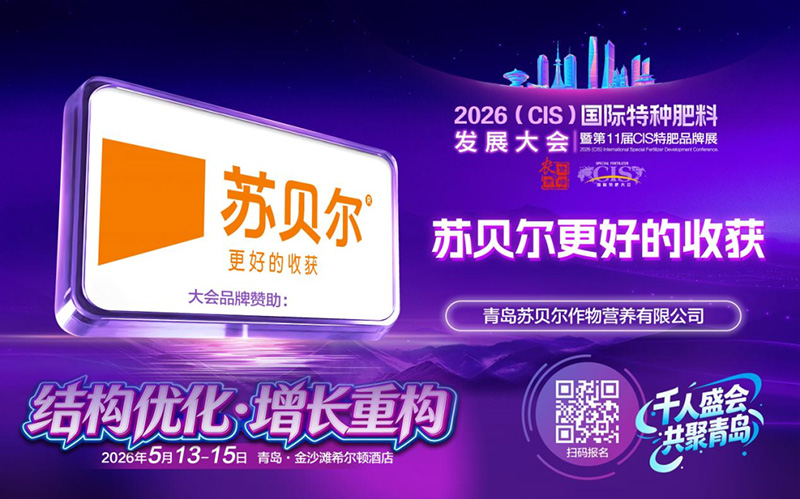
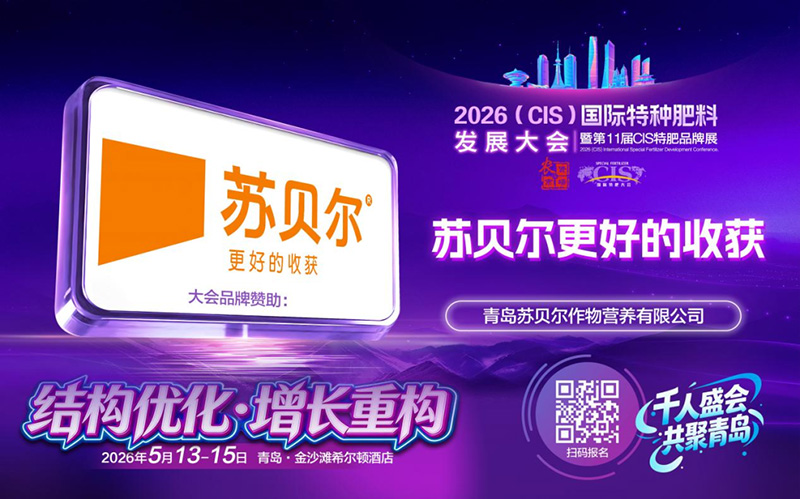
May 13-15, Qingdao. Sobel will unveil its integrated solution of "soil remediation + bio-efficiency enhancement + precision nutrition." This is not only a product showcase but also an intellectual feast about "structural optimization and growth reconstruction."
Agricultural Materials & Market Media: In your opinion, what are the current development pain points and market opportunities in the specialty fertilizer category?
Sobel: From the perspective of global agricultural input development trends, the specialty fertilizer industry has entered a stage of "structural upgrading." In the past, agriculture focused on solving the problem of starvation, so traditional chemical fertilizers pursued high yield. However, global agriculture is now shifting to a new stage of "high efficiency, high quality, sustainability, and risk resistance." Therefore, specialty fertilizers are evolving from "nutrition supplementation" to "crop system regulation."
The biggest pain points in the current specialty fertilizer industry are mainly concentrated in five aspects:
First, severe industry homogenization.
Many specialty fertilizer companies worldwide are focusing on humic acid, alginic acid, microorganisms, amino acids, fish protein, and medium/trace elements. However, there are few products with original mechanisms that can truly solve farmers' pain points, propose systematic solutions, and undergo long-term field trial validation. Moreover, Chinese agriculture covers a vast area with large east-west and north-south spans, resulting in significant differences in soil conditions and climate. Many companies cannot truly adapt measures to local conditions, leading to a market that increasingly competes on price, concepts, and packaging rather than technology, application, and results.
Second, agriculture is shifting from "yield increase" to "quality and safety," but many products remain stuck in the old era.
The most important indicators for future agriculture are not only yield, but also how to improve soil sustainability, crop quality, and agricultural product safety. However, many specialty fertilizers still focus on "explosive rooting, greening, and fruit bulking," lacking true improvement in soil health, product quality, and safety.
Third, global agriculture is facing pressure from climate change.
High temperatures, drought, salinization, waterlogging, and extreme weather are becoming the norm, rapidly increasing agricultural uncertainty. The greatest value of future agricultural inputs is no longer making crops grow faster, but making crops survive more steadily. Therefore, stress-resistant, biostimulant, and regulatory products will become increasingly important. The global biostimulant market is experiencing sustained high growth.
Fourth, the global agricultural input industry is shifting from chemical agriculture to biological agriculture.
Europe and North America are promoting fertilizer and pesticide reduction, green agriculture, and regenerative agriculture. This means that in the future, microorganisms, biostimulants, organic carbon, rhizosphere conditioning, and soil health will become the new core directions for global agricultural inputs.
Fifth, the industry is shifting from "selling products" to "selling solutions."
In the future, truly competitive companies will not be single-fertilizer enterprises, but integrated agricultural technology companies that can provide crop nutrition solutions, rhizosphere management solutions, precision agriculture solutions, data-driven planting solutions, and organic agriculture solutions.
In our opinion, the biggest future market opportunities lie mainly in the following directions:
1.Biostimulants: This is one of the fastest-growing agricultural input sectors globally in the next decade. Its core value is enhancing stress resistance, improving utilization efficiency, and strengthening plants' own regulatory capabilities. Alginic acid, humic acid, and microorganisms all fall into this direction.
2.Soil and Rhizosphere Ecology: Because the rhizosphere determines absorption efficiency, crop health, micro-ecological stability, and long-term productivity, the future competition will not be just about "fertilizers," but about the "underground ecosystem."
3.Stress Agriculture: One of the biggest opportunities in future agricultural inputs is to establish "crop stress resistance systems" around high temperature, drought, salt damage, cold damage, and continuous cropping.
4.Premiumization of Medium and Trace Elements: Future agriculture will no longer focus solely on supplementing N-P-K (Nitrogen-Phosphorus-Potassium), but will place greater emphasis on functional elements such as zinc (Zn), boron (B), iron (Fe), molybdenum (Mo), and magnesium (Mg). High-quality agriculture increasingly relies on precision nutrition, requiring the development of efficient absorption and utilization of medium and trace elements.
Agricultural Materials & Market Media: What is your company's core focus in the specialty fertilizer sector?
Sobel: Our core focus is not simply to make a product, but to solve various pain points caused by crop stress, helping growers achieve better harvests.
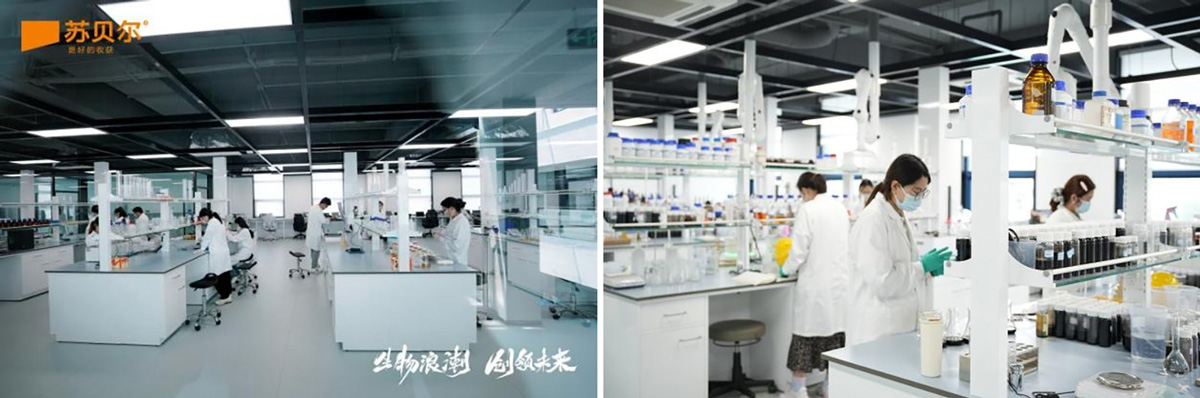
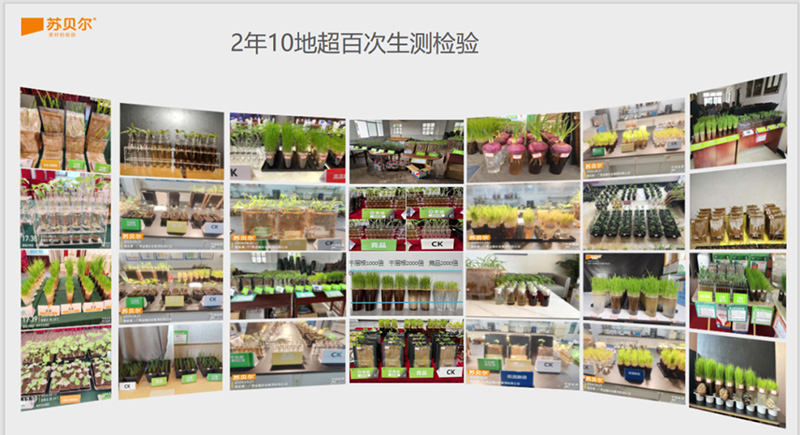
Currently, relying on the PHI Plant Health Institute, Sobel conducts research focus on the five major abiotic stresses: water, light, temperature, soil, and air. This enables us to precisely resist various problems affecting crop yield and quality caused by high temperature, low temperature, drought, salinization, etc.
Furthermore, Sobel has achieved a paradigm shift in agricultural stress management through the innovation of bioactive substances. Breakthroughs have been made in research on soil salinization and secondary salinization. At the same time, core technologies such as target extraction technology for alginate oligosaccharides, preparation of enzymatically hydrolyzed small molecule peptides & amino acids, SST Delivery Technology, and Black Links Technology have been industrialized.
Supported by a professional R&D platform and industry-university-research cooperation, Sobel explores soil improvement, biostimulants, and crop stress resistance technology, constructing an integrated solution of soil remediation, bio-efficiency enhancement, precision nutrition, and stress-resistance cultivation. Differentiating itself from traditional fertilizer enterprises, Sobel places greater emphasis on plant health management and stress response, possessing core competitiveness in product technological innovation, improvement of fertilizer use efficiency, and adaptation to complex planting environments, aligning with the development needs of green agriculture and high-quality cultivation.
Agricultural Materials & Market Media: What is your company's core focus and main promoted products in the specialty fertilizer sector, and what are their functional characteristics and applications?
Sobel: Our core focus is on biostimulants, biofertilizers, and biopesticides.
The main promoted product is GreatRoot.
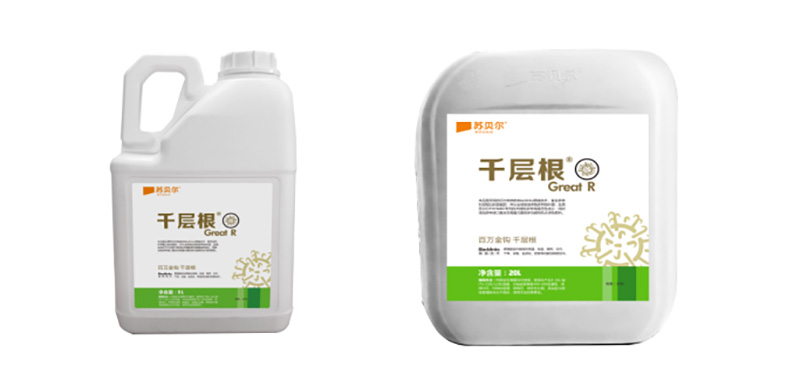
GreatRoot® is a functional organic water-soluble fertilizer using Sobel's exclusive Black Links® Technology. It is rich in 6 major functional groups, capable of improving soil structure, chelating nutrients, regulating soil pH, activating beneficial microbial communities, and providing energy to plants, indirectly promoting plant cell division, elongation, and root development. The product has high content of active substances, high absorption and utilization rates, and is rich in comprehensive trace elements, effectively supplementing crop nutrition deficiencies.
Using GreatRoot helps crops resist various abiotic stresses such as temperature, light, moisture, and fertilizer damage. It alleviates problems including difficult rooting, weak root systems, yellowing, poor flower bud differentiation, poor continuous fruit setting, slow fruit expansion, and premature senescence, thereby increasing crop yield, improving quality, and enhancing grower income.
Unlike common functional water-soluble fertilizers, GreatRoot utilizes 2 high-activity extraction technologies, 3 globally selected premium raw materials, and a 4-item molecular weight testing system. This truly achieves smaller molecular weight for easier absorption, higher content and stronger activity of active substances, starting from rhizosphere environment remediation to help crops restore health and vitality.
Agricultural Materials & Market Media: The theme of this Specialty Fertilizer Conference is "Structural Optimization, Growth Reconstruction." How do you understand this theme, and how does your company plan to achieve its own growth reconstruction?
Sobel:
1. Product Structure Optimization
Upgrading from nutritional products to functional products. The fastest-growing products in the future will no longer be traditional nutritional supplements, but rather: biostimulants, stress-resistance products, rhizosphere conditioning products, soil remediation products, and quality-enhancing products. The future of agriculture will compete not on more fertilizer, but on healthier crops. Relying on its research institute, Sobel enhances product power to solve crop pain points.
2. Channel Structure Optimization
Enhancing Sobel's channel capability to serve high-end growers, facility agriculture users, large-scale farms, and branded agricultural bases. These customers are more concerned with stability, quality, stress resistance, and long-term returns, rather than merely low prices.
3. Service Structure Optimization
Upgrading from selling products to selling solutions. The future agricultural input industry will increasingly resemble the healthcare industry. What users truly need is not a bag of fertilizer, but: problem diagnosis + solution provision + ongoing management.
About Sobel:
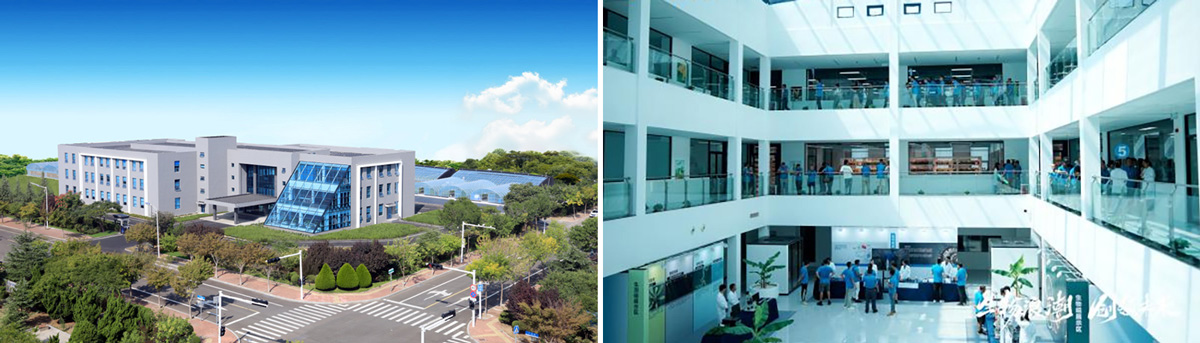
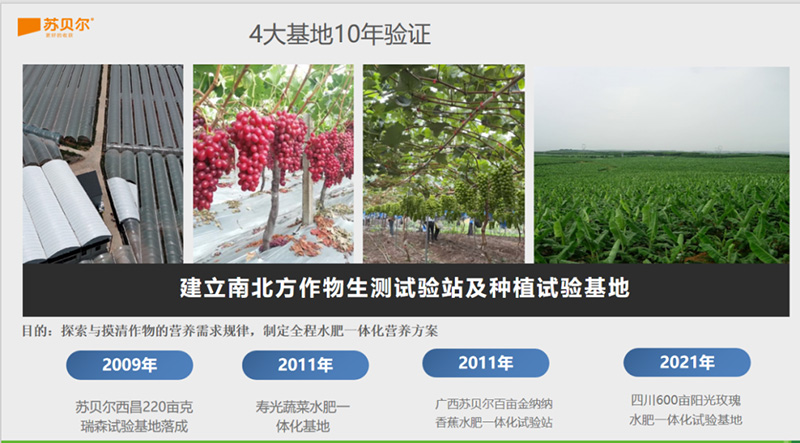
Qingdao Sobel Crop Nutrition Co., Ltd., established in 2007, is a high-tech enterprise integrating R&D, production, and sales. It is a foreign-oriented technology company focusing on crop nutrition research, production, and sales, and possesses four cultivation bases (Kreisler grape base, banana test station, pitaya test farm, and Shine Muscat test farm).
Sobel prioritizes R&D: Relying on the PHI Plant Health Institute and a top research team of 150 members with Master's and Doctoral degrees, the company focuses on the five major abiotic stresses: water, light, temperature, soil, and air. Differentiating itself from traditional fertilizer enterprises, Sobel places greater emphasis on plant health management and stress response.
Through cooperation methods such as introduction, joint R&D, and market development, the company engages in deep collaboration with multiple internationally renowned specialty fertilizer enterprises, including SQM (Chile), Nouryon (formerly AkzoNobel Netherlands), Adob (Poland), UPL (India), Acadian (Canada), and Horrison (USA). Sobel is one of the leaders in China's specialty water-soluble fertilizer market.
As an industry benchmark in the field of crop stress nutrition management, Sobel has worked on the industry for 19 years. Across 30 provinces and regions in China, the company has over 300 technical service personnel, providing precision technical services to over one million growers. With the corporate vision of "Better Harvests," Sobel advocates the concept of "Plant Health + Nutrition," dedicated to a new quality life for humanity.